

Digital Leadership, Innovation and Project Management
I have managed a number of significant digital projects as part of the digital transformation program at the Victorian Archives Centre for Public Record Office Victoria. I am now based in Sydney and continue to work in the digital innovation space. My work has included managing the redesign and build of the State Archives Website of Victoria, using a Drupal CMS with multiple integrations, along with incubating a number of innovative digital tools to enable more intuitive access to the state’s archival collection. I have recently completed a two year proof of concept generative AI project, utilising machine learning and multi-modal pro applications, for large scale transcription and image description projects. I have completed training on digital leadership via the Royal Melbourne Institute of Technology, including skills development in agile project management and design thinking methodologies. More details and projects below…
Website SEO and AI Endorsement: From 2025 to 2026 I was hired as Senior Communications and Marketing Manager for Biosis, APEM Group, a large ecology and aboriginal heritage firm in Sydney servicing the construction and renewable energy sector. During that time I improved their SEO and AI endorsement from no ranking to first page ranking, and endorsed as a leading consulting firm on AI Gemini Pro. To do that, I updated 168 webpages with meta tags, and produced 30 key service landing pages, wrote feature articles on their innovative and novel solutions for microbat and bird collision risk on windfarms, re-published in the renewable press.
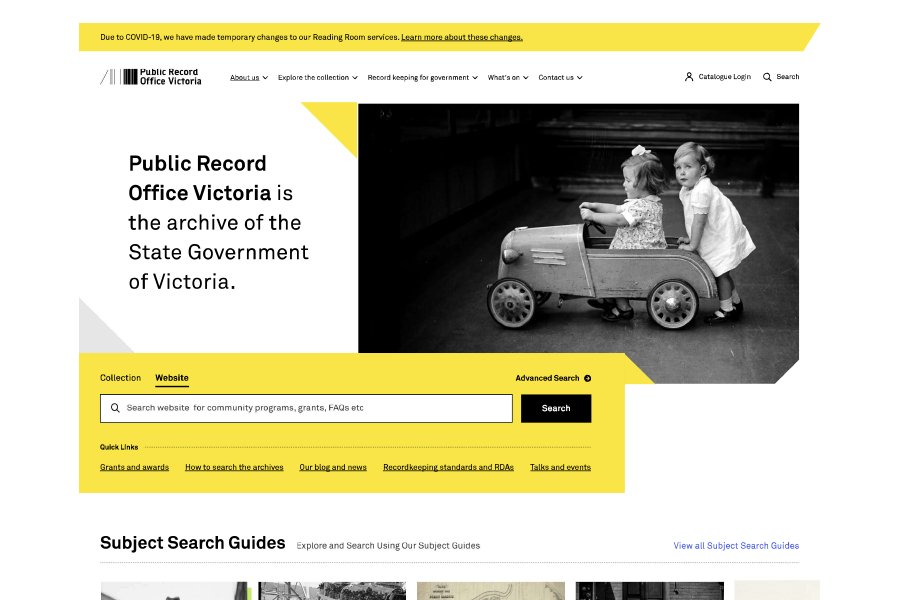
Website Product Owner and Project Manager: I was the product owner of Public Record Office Victoria's (state archives) website from 2016-2025. I led the website re-design process in 2016 from Wordpress to Drupal, which took two years due to the complexity of combining archival search and display with mulitple integrations, with a magazine training site. I led the project from inception to build, solving problems for multiple internal and external stakeholders. The new website needed to offer a more intuitive search experience, simple guidance pages focused on critical search information with embedded search fields, and flexible back end templates to service a variety of content and government advisory requirements. In addition to the catalogue search and order workflow, there is also a standalone photographic search page utilizing the public API, a bespoke search module to enable nuanced subject search, a step by step guidance template for Govenrment recordkeepers, an annually published academic journal, and a searchable document database. This website was highly commended at the 2017 AMAGA awards for digital projects.
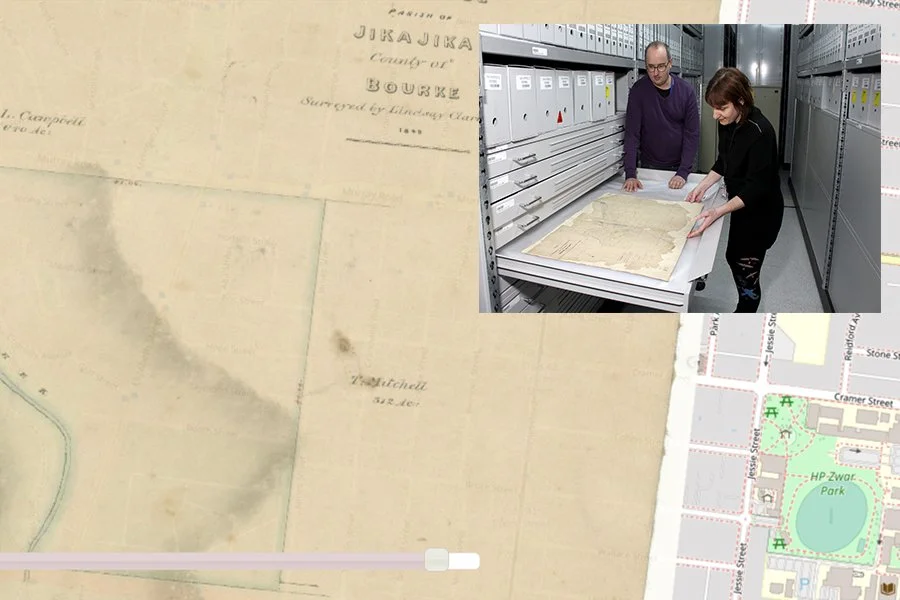
Mapwarper Crowdsourcing Project Management: I was the insitigator and project manager responsible for The Mapwarper Project at the State Archives of Victoria. This project has enabled better access to Victoria's archival map and plan collection (12,000+ digitised maps) by using an open sourced mapping application called MapWarper. The project initially linked existing metadata (historic location names) with contemporary lat-longs and postal code data to offer a contemporary place name (friendly) search. The project then engaged the public to correctly position the historic maps over the application's digital map, the base layer, offering users an immediate time comparison between the past and the present, ideal for researchers and property owners. This project has seen 12,000 historic maps rectified by the public and is widely used by heritage consultants, historians, family historians, property and government administrators. The API enabled this data and maps to be then displayed within the Victorian Government's Digital Twin version of Victorian Maps and Data Sets.
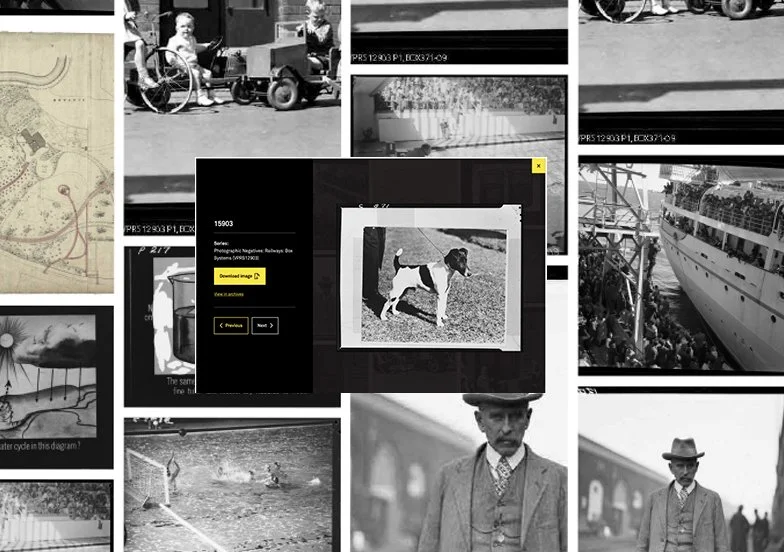
Photograph Search Interface. Project Management: I instigated and project managed the delivery of a unique photo search page for the Victorian state government's historic photo collection of 10k+ photographs. This project responded to an ongoing user need to more efficiently view tens of thousands of digitised historic photographs of Melbourne and Victoria from the 1850s onward. The collection had limited descriptive data, so this offered a visual scanning search experience. Working with a developer and design team the project drew on the public API to display a waterfall of photos based on keyword, IIIF manifest metadata, and series number, increasing the efficiency of searching images one by one. Each image links to the item catalogue page offering options to download at high resolution.
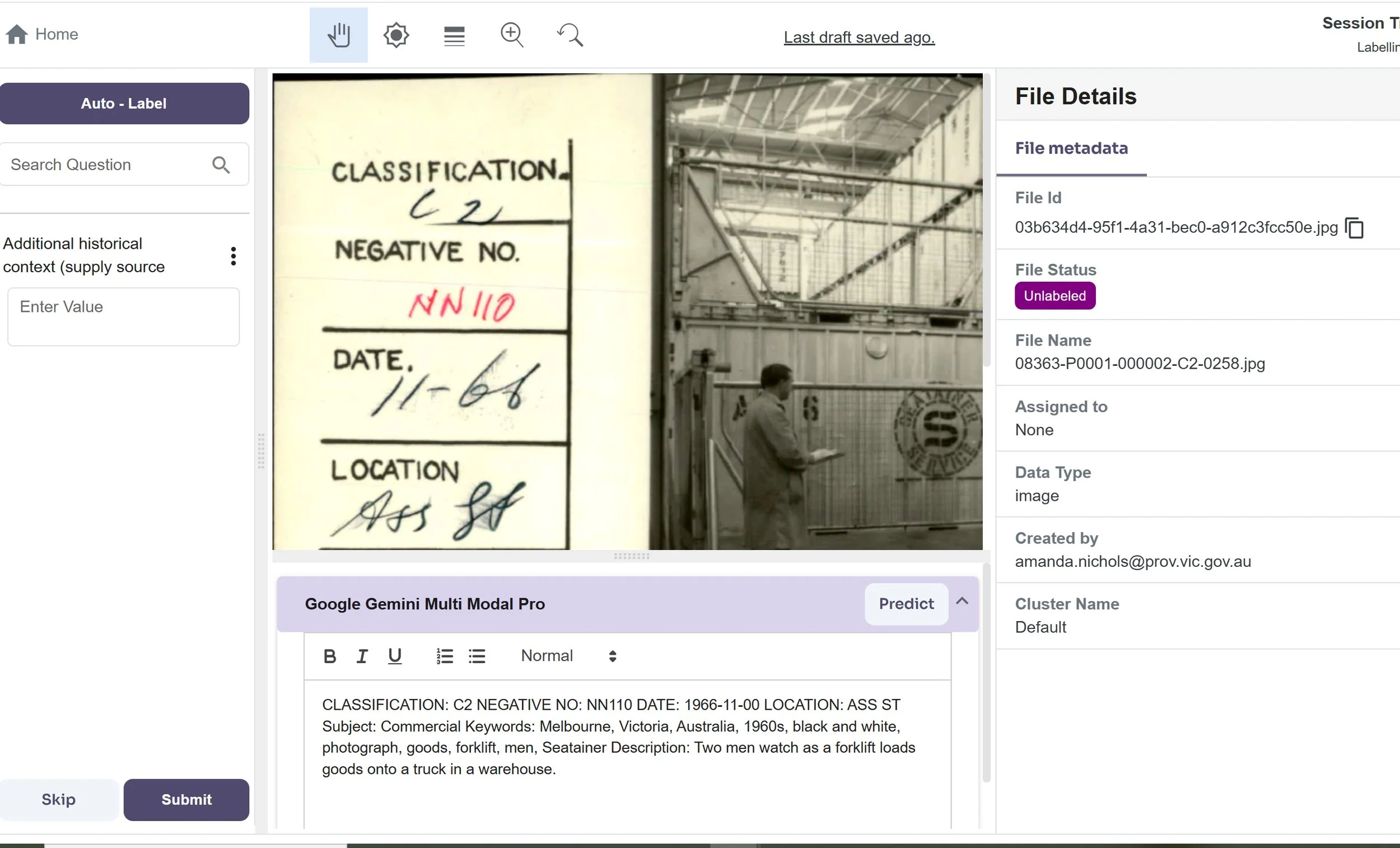
AI - Human workflow Project Manager for Undescribed Collection Items. I worked on a pilot project to utilise a multi-modal AI tool (Google Gemini), built into an annotation workflow application called Labelerr, to help transcribe, describe and add keywords to large undescribed photographic collections. The project required careful consideration of Government policy on AI use, design of the best prompt to illicit accurate results, import and export workflows with human review, as well as collaboration with Tensormatic's developer team to modify their Labellerr interface to suit the collections industry. This project was discussed at the AI4GLAM Fantastic Futures Conference and presented to the Vic Gov Community Of Practice AI network. In addition my team were also piloting the use of a range of open source AI transcription tools to transcribe 19th Century cursive writing, and to work on a web interface upgrade for display.
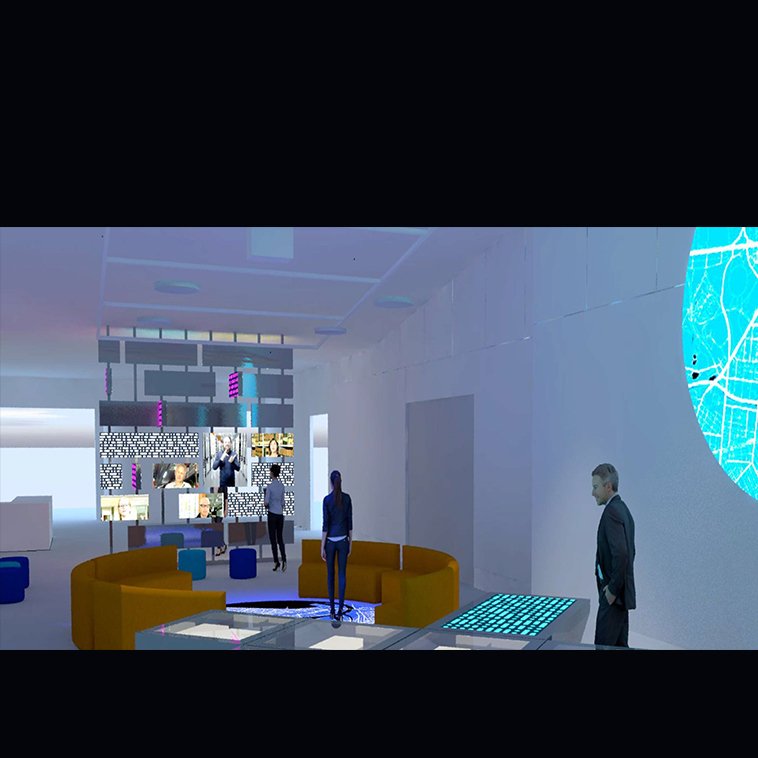
Re-envisioning the Lobby Gallery: In 2023 I collaborated with ArtBox to re-envision the entrance of the Victorian Archives Centre to become an interactive multi media projection and digital engagement space showcasing the important work of the public archive in people's day to day lives. Themes included history of place, development of Country, people's identity and accountable government. The project resulted in a series of redesigns, a slide pack of comparable examples and a budget estimate for the build. The project is still under exploration.